God’s message comes through imperfect words
What if grammatical errors in the Book of Mormon aren't evidence against its divine origin — but an opportunity to experience God's grace?

Shima Yoshida
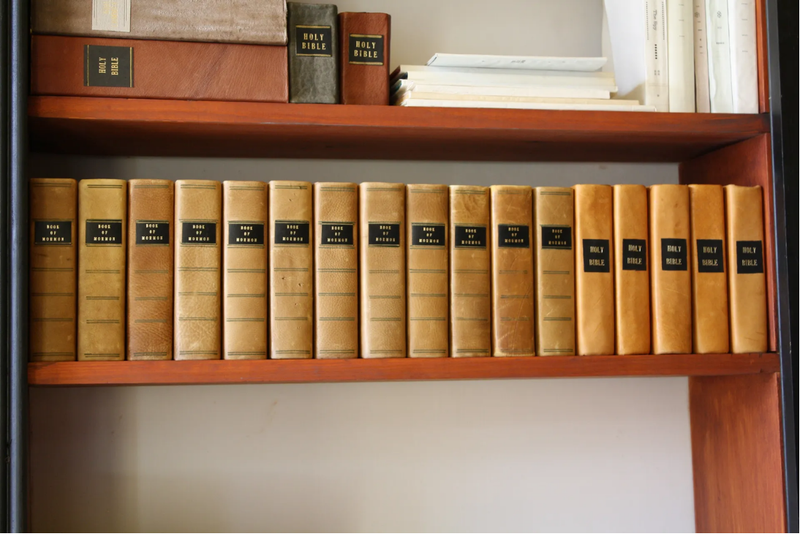
I was asked the question: How could grammatical errors in the Book of Mormon make its message harder to understand?
It is an interesting question, especially because I believe the Book of Moromo was translated by the power of God.
Before I dive into it, let me explain where I am coming from.
I am a Christian, a member of The Church of Jesus Christ of Latter-day Saints. I believe the Book of Mormon is scripture — another Testament of Jesus Christ. I believe Joseph Smith translated it from an ancient record through the power of God.
If you are not familiar with the Book of Mormon, that probably raises some questions. So I decided to look at how people have approached this question.
I found quite a few discussions about grammatical and textual errors in the Book of Mormon. Some people see those errors as evidence against its divine origin.
The Book of Mormon includes the testimony of the three witnesses. They saw the original plates from which the book was translated. They described hearing the voice of God. It declared that the plates had been revealed, translated by the power of God, and the translation was correct.
So the question seems reasonable: If God was involved in the translation, shouldn't the book be perfect?
I found arguments that say exactly that.
Another argument points to Joseph Smith’s statement that the Book of Mormon was “the most correct of any book on earth.” If errors exist, perhaps we should question his claim that he was a messenger of God.
These arguments are logical. I understand why they might be convincing.
But I disagree.
I want to share something that happened to me. It helped me understand why.
Learning to understand
As a Latter-day Saint, I watch the general conference every six months.
It is a worldwide gathering where the Church leaders speak to members and anyone else who wants to listen. We believe they seek inspiration from God as they prepare their messages.
Sometimes I hear a message and think, That was exactly what I needed.
Sometimes I feel peace.
And sometimes … I don’t understand at all.
President Dallin H. Oaks is one of the speakers I have found difficult to understand. Before becoming a Church leader, he was a lawyer and served as a justice on the Utah Supreme Court. Some of his topics and language feel very advanced to me.
I remember listening to one of his general conference messages and thinking, This is probably really good … but I’m not getting it. The message went in one ear and out the other.
Then, this year, I had an opportunity to read the same message again. And this time, I understood it!
Between two readings, I had studied ethics and law in college. I had become familiar with some of the language and ideas. Something that had once seemed difficult became understandable.
And that experience made me think about the earlier question.
What if the problem isn’t always the message?
I believe God speaks to us through the scriptures. But have you ever discovered something meaningful in a book only after reading it more than once?
Isaiah said: “For precept must be upon precept, line upon line; here a little, and there a little” (Isiah 28:10).
Perhaps God may sometimes allow truth in the scriptures to be hidden beneath layers, inviting us to study, ponder, and search for it. Perhaps that is part of His wisdom — and His grace.
The treasures aren’t always sitting on the surface. Sometimes, if we focus too much on what seems imperfect, we may miss the gem that God wants us to discover.

The answer: Grace
Perhaps some of these obstacles are even opportunities to see whether we are willing to keep searching when the treasure is not immediately visible.
I have come to see God’s grace in allowing those errors to remain. Perhaps He gives us the opportunity to find them, understand them, and mend them through our own agency.
On the Book of Mormon title page, Joseph Smith wrote: “If there are faults they are the mistakes of men; wherefore, condemn not the things of God.”
We make mistakes, and God knew it. God does not abandon us because we are imperfect. That’s why He sent His son, Jesus Christ. Through the Atonement of Jesus Christ, He allows us to repent, improve, and become something more than we are today.
Royal Skousen, who has spent years studying the textual history of the Book of Mormon, acknowledges that errors have entered the text. Yet he argues that they do not significantly interfere with its message or doctrine. His conclusion is:
“The word of God still comes through.”
That is what I believe.
If you are not a Latter-day Saint, I don’t expect you to begin with the same beliefs I have. You may see grammatical problems in the Book of Mormon. You may wonder how a book with human imperfections could possibly come from God.
I just hope you won’t stop there.
Because maybe divine power is demonstrated by God’s ability to work through our imperfections.
The message was there all along. Maybe we were just learning how to hear it.