Seeking truth without losing kindness
I used to think that being kind meant avoiding conflict. But the more I learn about communication, the more I wonder if kindness might actually mean having the courage to disagree — and still care about the person on the other side.

Shima Yoshida

Joseph Smith once said:
"When persons manifest the least kindness and love to me, O what pow'r it has over my mind… The nearer we get to our heavenly Father, the more are we dispos'd to look with compassion on perishing souls — [we feel that we want] to take them upon our shoulders and cast their sins behind our back… if you would have God have mercy on you, have mercy on one another."
It is easy to be kind when we agree with someone. The real challenge comes when we strongly disagree, especially when their opinions frustrate or even offend us.
As a communication major, I think about this question a lot. I am learning about the media, communication law, and ethics. And sometimes what I learn surprises me.
For example, I was surprised — or honestly, kind of shocked — to learn that even hate speech can receive constitutional protection in the United States.
So, what exactly is hate speech?
In simple terms, it is language that attacks, humiliates, or encourages hatred toward a group of people because of things like race, religion, skin color, gender identity, ethnicity, disability, or national origin.
The First Amendment takes a broad approach to freedom of speech. It protects not only ideas that are popular or easy to hear, but also opinions that may make us uncomfortable, angry, or even offended. This protection is especially important when the speech is part of a public debate.
Of course, that doesn't mean we can say absolutely anything without consequences. There are limits. For example, speech that directly encourages imminent criminal activity or makes specific threats of violence is not protected.
But why protect speech that can be hateful or offensive at all?
A global human rights organization describes freedom of expression this way:
"Your voice matters. You have the right to say what you think, share information, and demand a better world.”
The basic idea is that people need to be able to hear different opinions — even opinions they strongly disagree with. A democracy cannot work if people are only allowed to hear ideas that everyone already agrees with.
The principle behind protecting even unpopular speech is to limit the government’s power to silence people and to preserve an open public debate. It reflects the fundamental belief that popular sovereignty belongs to the people.
Journalism has an important role in this. Journalists help bring different voices into the public conversation.
Today, Social media has made it possible for almost anyone to share information, comment on current events, and reach an audience.
I see this trend in my home country of Japan. Japanese culture generally discourages people from speaking up or creating public conflict. But social media can feel different because people can remain anonymous. I often see much harsher criticism online than I would ever hear in person.
When anyone can take on the role of a journalist online, the responsibility for how we communicate also belongs to all of us.
When I hear stories about people being deeply hurt by abusive comments online, I think about that responsibility. Having the freedom to speak does not mean we should stop thinking about how our words affect other people.
One thing I have learned from living in the United States is that it is possible to disagree without being disagreeable.
I recently read about two scholars, Robert P. George and Cornel West. They disagree about many important political and social issues, yet they have remained close friends.
How do they do it?
George explained that their goal is not to win arguments or persuade one another. Instead, they try to reach a deeper understanding. As he put it, "The goal is to get the truth… It's a dialectical partnership in the pursuit of truth."
That's beautifully said.
In that same discussion, West shared two profound observations that really stuck with me.
First, he used the phrase "Mormon soulcraft" to describe something he observed in members and leaders of The Church of Jesus Christ of Latter-day Saints. He connected it to three ideas: remembrance, reverence, and resistance.
West talked about the Latter-day Saint tradition of remembering persecution, perseverance, and persistence. "Sustaining that memory creates reverence, which counters pride and fosters empathy," he said. And resistance means having the courage to go "against the grain."
Second, West mentioned that students attend school to "learn how to die." He wasn't talking about physical death. He meant letting go of ideas and assumptions that we have accepted without questioning them.
West put it, "there is no rebirth without death."
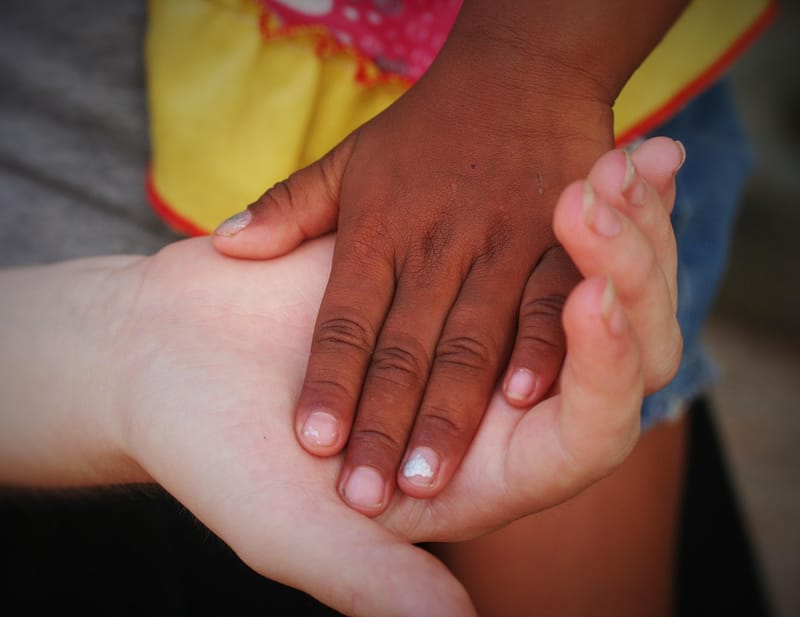
The same idea of seeking truth came up in another story I read about BYU President C. Shane Reese. When he was appointed BYU president, he turned to President Dallin H. Oaks, the president of The Church of Jesus Christ of Latter-day Saints, for guidance.
President Reese shared the counsel he received: "If there is something that this generation, the students of your university, needs, it is models of how to disagree better… The world desperately needs examples of people who can engage in meaningful conversations when they don't share the same opinions."
Don't all these stories point to the same idea?
We can disagree with someone without disrespecting them. We can question ideas without attacking people. And we can search for truth without making every conversation a battle.
This brings me back to Joseph Smith's words about kindness, compassion, and mercy.
The way we communicate about other people matters, whether we are journalists or simply people with a social media account. Even when we strongly disagree with someone, we can still treat that person with kindness and respect. Didn’t Jesus Christ show us that we can recognize someone’s wrong choices while still loving the person?
Maybe this is one way we can practice charity and compassion in the way we communicate. In a divided world, kindness, consideration, and caring for one another offer a better way forward. It may simply mean that we are willing to listen, understand, and treat people with respect.
And perhaps the goal is not to win. Perhaps the goal is to get closer to the truth — together.